Get Marketing Insights First
Subscribe to receive actionable strategies, growth tips, and industry insights delivered straight to your inbox.

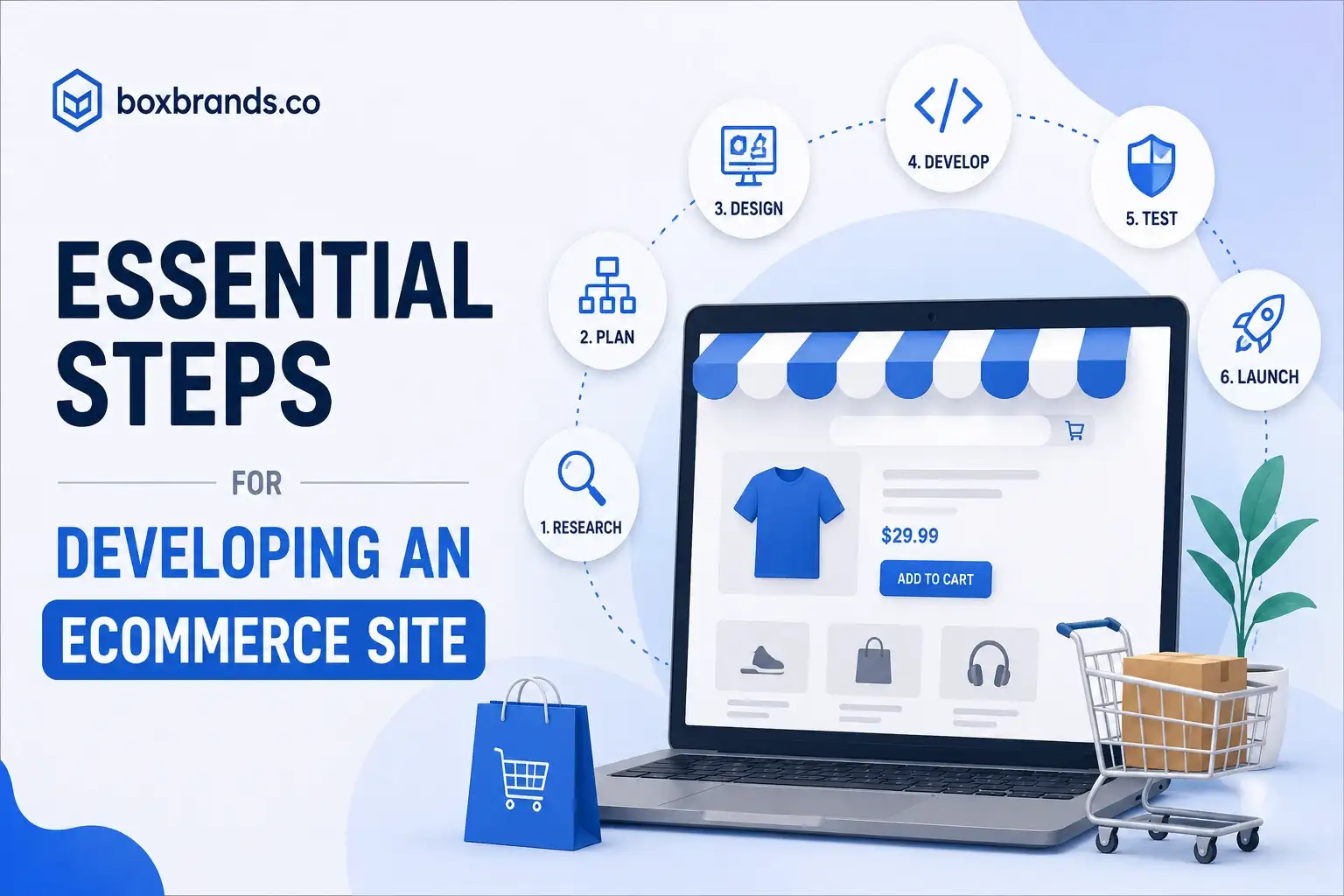
In today’s digitally driven retail landscape, a physical storefront is no longer enough to guarantee business survival. Expanding into the digital space is a necessity, but launching a successful online store requires far more than just uploading a few product photos to a template. For businesses ready to take the plunge into digital retail, understanding the nuances of development ecommerce site web strategies is the critical first step toward long-term profitability.
Whether you are an established brick-and-mortar retailer or an ambitious startup, comprehensive ecommerce site development requires a blend of technical expertise, strategic design, and operational planning. In this guide, we will break down the essential steps to help you navigate the complex world of ecommerce website development and build a scalable, high-converting digital storefront.
While ecommerce development has its own unique requirements, it is part of the broader custom web development process that businesses use to create high-performing digital experiences. To learn more about the complete development lifecycle, visit our Custom Website Development Company guide for expert insights and best practices.
Before writing a single line of code or choosing a color palette, you need a solid foundation. If you are wondering how to build online store from scratch, it all begins with mapping out your business requirements, target audience, and product complexity.
One of the most critical decisions you will make is choosing best ecommerce platform for your specific needs. This choice generally boils down to understanding the differences between SaaS vs open source ecommerce solutions.
For brands with highly specific needs, relying on off-the-shelf themes won’t cut it. In these cases, investing in custom ecommerce web development allows you to build unique functionalities tailored precisely to your business model, ensuring your store stands out in a crowded market.
A beautiful website is useless if customers can’t figure out how to buy your products. Optimizing user experience for online shopping should dictate every design decision you make.
More than half of all global web traffic comes from mobile devices. Implementing a mobile responsive design for retail sites is no longer optional; it is mandatory. Buttons must be easily clickable with a thumb, text must be legible without zooming, and navigation menus should be neatly tucked into intuitive hamburger icons.
When prioritizing custom ecommerce website development, ensure your design team integrates essential ecommerce website features that modern consumers expect. These include:
One of the biggest hurdles in e commerce website development is getting users over the finish line. Implementing proven reducing shopping cart abandonment strategies is essential for your bottom line. Actionable tips include offering guest checkout options, displaying shipping costs upfront to avoid surprise fees, and utilizing progress indicators so users know exactly how many steps are left in the purchase process.
Your store’s frontend might look fantastic, but the backend is where the actual business happens. A seamless integration of operational tools is what separates amateur setups from professional digital retailers.
You need to provide customers with a frictionless way to pay while ensuring their financial data is locked down tight. If you are looking for an ecommerce payment gateway integration guide, the core advice is simple: offer multiple payment options (credit cards, PayPal, Apple Pay, Buy Now Pay Later services) and prioritize security above all else.
Securing customer data with PCI compliance is a legal and ethical requirement. Ensure your chosen payment gateway handles the heavy lifting of encryption and compliance so that raw credit card data never touches your servers.
If you sell physical goods across multiple channels, you need real-time data to prevent stockouts or overselling. Seamless inventory management system integration ensures that your website, warehouse, and physical stores (if applicable) are all communicating instantly. This sync saves countless hours of manual data entry and protects your brand reputation by ensuring customers only buy what is actually available.
Building an incredible store is only half the battle; people actually need to find it.
Organic traffic is the lifeblood of sustainable ecommerce. Implementing robust search engine optimization for product pages requires strategic keyword placement in product titles, detailed and unique product descriptions (avoiding manufacturer copy), and optimized image alt-text. Clean URLs and schema markup (structured data) are also vital, as they help search engines understand your products and display rich snippets like price and reviews directly in search results.
Modern shoppers are impatient. Improving website loading speed for conversions is a technical necessity. Even a one-second delay in page load time can cause a drastic drop in conversion rates. To keep your site blazing fast:
As your business grows, your website must be able to handle increased traffic, larger product catalogs, and expansion into international markets. Anticipating these needs is the key to successfully scaling digital storefront for business growth.
For enterprise-level businesses or those experiencing rapid growth, traditional ecommerce platforms might eventually feel restrictive. This is where exploring headless commerce architecture benefits becomes highly advantageous.
In a headless setup, the frontend (the customer-facing design) is completely decoupled from the backend (the commerce engine). This allows your marketing and design teams to make rapid visual changes and deliver content to any device (like smartwatches, IoT devices, or progressive web apps) without disrupting the underlying checkout and inventory systems. It offers ultimate flexibility and unparalleled site speed.
A common and highly understandable question is: what is the true cost of building professional web shop? The reality is that the budget can vary wildly based on your requirements.
A basic, template-based store using a SaaS platform might cost a few thousand dollars to set up. However, highly customized, complex builds requiring intricate API integrations, bespoke UX/UI design, and advanced security protocols can range from $20,000 to well over $100,000.
Because of the high stakes and technical complexities involved, many businesses opt to partner with specialized ecommerce web development services. Hiring an agency ensures that you have experts handling the coding, design, security, and SEO, allowing you to focus on sourcing products and marketing your brand. When evaluating the intricacies of development, ecommerce site web standards dictate that professional execution yields the highest return on investment.
Developing a successful ecommerce website requires careful planning, the right technology stack, and a user-focused design strategy. For a complete overview of the website development process, explore our guide on Custom Website Development Company, where we cover everything from planning and design to development, testing, and long-term maintenance.
Embarking on a journey of digital retail creation is a transformative step for any business. By carefully planning your platform, prioritizing a frictionless and mobile-friendly user experience, securing your payment gateways, and laying down a strong foundation for SEO, you set your brand up for sustainable success.
Whether you choose to build a simple SaaS storefront or invest in advanced, decoupled architectures, remember that an ecommerce website is never truly “finished.” It is a living, breathing digital asset that requires ongoing testing, optimization, and updates to keep pace with changing consumer behaviors and technological advancements. Take these essential steps, invest in the right partnerships, and watch your online store thrive.